Rule 01
Check before you trust
AI can be wrong or make things up, so verify anything important.
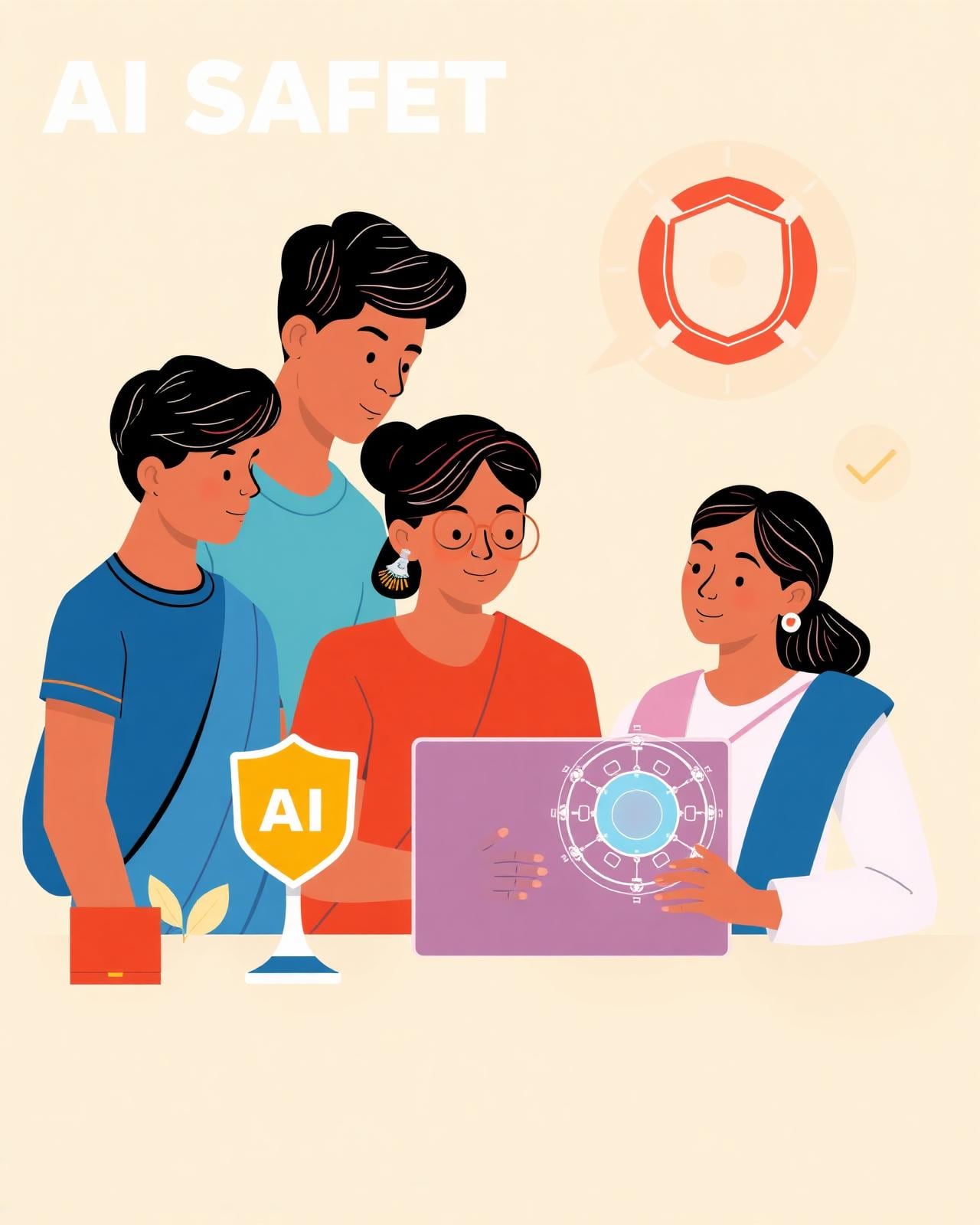
Simple, practical rules for using AI safely, honestly and wisely, for students, teachers and parents.
AI can be a great help, but only when it is used with care. This page explains what responsible AI use means and gives clear, everyday rules anyone can follow to stay safe and use AI the right way.
Using AI responsibly means using it in a way that is safe, honest and fair, while keeping your own thinking in charge. It is about treating AI as a helper you check and guide, not a source you trust blindly.
The same idea applies whether you are a student doing homework, a teacher planning a lesson, or a parent at home.
AI can be wrong or make things up, so verify anything important.
Never share personal, private or sensitive details with AI tools.
Use AI to learn, not to cheat, and be open about when you have used it.
AI can reflect unfair bias, so think critically about its answers.
Be alert to deepfakes and misinformation made with AI.
Use your own judgement; AI is a helper, not the decision-maker.
Never use AI to harm, mislead or bully others.
A simple habit prevents most problems: keep personal information out of AI tools. That means no full names, addresses, phone numbers, school details, passwords or anything you would not share publicly.
Treat AI like a public space, and protect children's information especially carefully.
In India, the Digital Personal Data Protection Act, 2023 sets the rules for how children's data must be handled. HAILM is built to be safe by design and aligned to the DPDP Act, so your data and your child's data stay protected.
AI can create realistic but fake images, videos and audio, known as deepfakes, and can spread convincing misinformation. Learning to question what you see and check the source is now an essential safety skill.
If it feels off, pause and verify. Check who made it, when, and whether trusted sources show the same thing.
Responsible use looks a little different for each group. HAILM has guidance for all three.
It means using AI safely, honestly and fairly, while checking its answers and keeping your own judgement in charge.
It can be, with the right habits and supervision. Use age-appropriate tools, protect personal data, and teach children to question what AI produces.
Do not share personal, private or sensitive information, and treat anything you type into an AI tool as if it could be seen by others.
Yes. AI can give wrong, biased or made-up answers, so always check important information.
Deepfakes are fake images, videos or audio created with AI that look real. Spotting them is part of staying safe online.
HAILM teaches students, teachers and parents how to use AI responsibly, as part of a structured program built for India.